
Research
Principal Investigator: Dr. Randall W. Davis
Position / Title: Professor, Department of Marine Biology
Affiliation: Texas A&M University at Galveston
Project Title: Intra-annual movements and habitat-associations of sea otters in Prince William Sound, Alaska
Research Site: North-eastern Prince William Sound, Alaska, USA
Effects of oil on fur-bearing mammals and methods of mitigation
In the mid-1970s, the Bureau of Land Management (BLM) and the National Oceanic and Atmospheric Administration (NOAA) funded research through the Outer Continental Shelf Environmental Assessment Program (OCSEAP) to evaluate whether offshore petroleum development on the Alaskan continental shelf could harm marine ecosystems. As part of this mandate, the first study examining the thermal conductance of sea otter and northern fur seal pelts after exposure to Prudhoe Bay crude oil was conducted. The results showed that even light oiling severely compromised the pelage’s insulating air layer, doubling heat loss and sharply reducing thermoregulatory capacity (Kooyman, Davis, and Castellini 1977). In the late 1970s, additional OCSEAP-funded research assessed the effects of oiling on sea otter behavior and metabolic rate. Those studies demonstrated that sea otters did not avoid oil, that their resting metabolic rate increased by 41% when only 20% of the fur surface was oiled, and that it more than doubled after washing, severely impairing thermoregulation (Costa and Kooyman 1982).
In the early 1980s, the Minerals Management Service (MMS), U.S. Department of the Interior, funded research to develop methods to mitigate the effects of oil on sea otters, with a focus on the California population. Drs. Randall Davis and Terrie Williams led this effort by testing cleaning agents and found that Dawn® dishwashing detergent was the most effective at removing crude oil and restoring fur loft (Williams et al. 1988). Their work confirmed that oil significantly increases thermal conductance, but that thorough Dawn cleaning and rinsing can restore much of the pelt’s insulating ability. In 1985, sea otters from Prince William Sound were brought to the Hubbs Marine Research Institute in San Diego, where 20% of their body surface area was oiled with Prudhoe Bay crude and then cleaned with Dawn® detergent. With active grooming, the otters regained water repellency within 3–6 days (Davis et al. 1988). Davis and Williams further showed that oiling nearly doubled metabolic rate in live otters and that successful rehabilitation requires rapid capture, veterinary care, meticulous cleaning, and prolonged grooming. Together, these studies established the foundation for modern sea otter oil-spill response and rehabilitation protocols for fur-bearing mammals.
The grounding of the T/V Exxon Valdez on March 24, 1989, released 11 million gallons of Prudhoe Bay crude oil into western Prince William Sound. The resulting oil slick eventually spread along the coasts of the Kenai Peninsula, the Kodiak Archipelago, and the Alaska Peninsula, regions extensively inhabited by sea otters. The exact number of otters oiled is unknown, but based on population assessments at the time, it was likely in the thousands.
At the time, Alaska had no sea otter rehabilitation facility or trained personnel. At the request of the U.S. Department of the Interior and the U.S. Fish and Wildlife Service, Drs. Davis and Williams established an oiled sea otter capture and rehabilitation program at centers in Valdez, Seward, and Homer. Each facility eventually accommodated up to 100 otters and remained in operation until September 1989. In total, 357 otters were treated: 197 were released in Prince William Sound and along the Kenai Peninsula, and 37 were transferred to aquariums because of health concerns or because they were too young for release. After the program concluded, Davis and Williams spent six months documenting the operation, including comprehensive evaluations of the health effects of oil exposure on sea otters. Their findings were published in a book titled: Emergency Care and Rehabilitation of Oiled Sea Otters: A Guide for Oil Spills Involving Fur-Bearing Marine Mammals (Williams and Davis 1995).
Behavioral Ecology of Sea Otters in Prince William Sound, Alaska
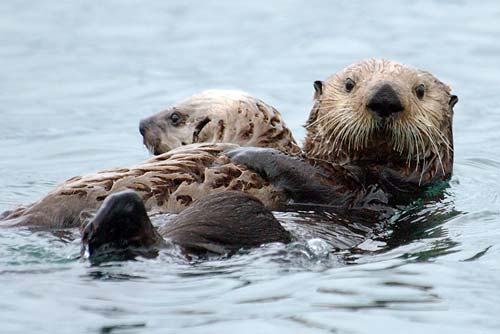
Since 2000, Dr. Davis has led an integrated research program on the behavioral ecology of sea otters in Prince William Sound, Alaska, with Simpson Bay as a focal natural area. This work has progressed from detailed field studies to synthetic treatments, where Dr. Davis and colleagues framed sea otters as marine specialists but diet generalists whose foraging, reproductive behavior, and maternal strategies are tightly constrained by extreme energetic demands and nearshore habitat structure (Davis and Bodkin 2021; Pearson and Davis 2021; Cortez and Davis 2021).
At the foraging level, his program has shown that sea otters are durophagous predators that locate epibenthic and infaunal invertebrates by combining tactilely guided forepaw search with underwater vision during short, shallow dives that are usually <30 m and ~2 min in duration, close to their aerobic dive limit (Wolt et al. 2012; Davis and Bodkin 2021). In Simpson Bay, males and females exploit nearly the full bathymetric range but preferentially forage in 5–15 m water over soft and mixed sediments, where clams dominate the diet and foraging success averages ~87% (Wolt et al. 2012). Time-budget and energetic analyses showed that adult males devote only ~14% of the day to foraging, yet require a daily food intake of ~30% of body mass to meet energetic demands (Finerty et al. 2009). Comparable analyses of females with dependent pups indicate similarly high energetic costs, with daily clam intake approaching ~29% of body mass in early lactation (Wolt et al. 2014; Cortez et al. 2016a,b). These findings demonstrate that even in a food-replete system, sea otters operate near the upper limits of their metabolic capacity, and they contributed centrally to the book’s broader treatment of how carrying capacity, prey depletion, and individual specialization modulate foraging effort and diet across the North Pacific (Davis and Bodkin 2021). Complementary work on females and pups quantified the costs of reproduction in an altricial mammal that gives birth at sea. Using continuous focal follows and activity–energy budgets, Dr. Davis and colleagues showed that neonatal pups are entirely dependent: during the first month they rest and nurse >90% of the day, while females devote ~50% of their time to resting with the pup on their abdomen, ~13% to pup grooming, and only ~9% to foraging (Cortez et al. 2016a,b). As pups grow from ~1.8 to ~5.8 kg over three months, they progressively develop swimming, self-grooming, and shallow diving, while females transition from relying on gestational energy reserves to full income breeding, increasing daily food intake to ~39% of body mass, and foraging up to one-third of the day. These results underpin the broader conclusion that females operate near the limits of their energetic capacity and that small reductions in prey availability or adverse weather can precipitate declines in maternal condition, pup abandonment, or early weaning (Cortez and Davis 2021).
Dr. Davis’s work has also clarified how resource defense polygyny shapes male sea otter reproductive behavior. Long-term observations and photo-identification in Simpson Bay revealed that adult males defend non-overlapping aquatic territories whose quality depends on size, shoreline configuration, accessibility, and prey-rich areas used by females, and that some males hold the same territory for multiple years with 16–34% interannual overlap (Pearson and Davis 2005; Pearson et al. 2006; Finerty et al. 2010). These territorial males invest substantial time in patrolling and aggressive defense while attempting to monopolize estrous females through short (~3-day) consortships involving frequent aquatic copulations, but provide no parental care—features explicitly linked to resource-defense systems in other marine carnivores (Pearson and Davis 2021).
As a capstone to this 20-year research program, Dr. Davis produced the first mechanistic estimate of sea otter carrying capacity in Simpson Bay by integrating two decades of population surveys with detailed measurements of prey availability and consumption (Davis et al. 2021). They found that the adult population has remained stable at ~110 otters (5.2 km⁻²) while consuming ~22% of annual bivalve biomass—an amount fully replaced each year based on clam age structure. The distribution of butter clams and stained macomas, which make up ~71% of total bivalve biomass, closely matched observed foraging patterns, confirming that prey resources are sufficient to support the long-term population. This integration of behavioral ecology, energetics, and prey dynamics demonstrates that sea otters in Simpson Bay have reached carrying capacity based on food availability.
Since 2000, Dr. Davis’s research has significantly deepened our understanding of sea otter natural history by showing how energetic demands and the constraints of nearshore habitats govern their foraging, reproductive behavior, and maternal strategies. His studies demonstrated that sea otters are highly efficient, tactile predators in soft-sediment systems; that territorial males use resource defense polygyny to monopolize receptive females; and that females rear altricial pups while operating near the limits of their metabolic capacity. Together, this work provides a detailed, integrative picture of how sea otters balance energy acquisition, reproduction, and pup care, and how these processes shape population dynamics in coastal ecosystems.
Sea Otter Morphology and Physiology
Dr. Davis’s research has shown that sea otters possess a uniquely integrated suite of morphological and physiological adaptations that enable life as the smallest marine mammal. He demonstrated that sea otters maintain a resting metabolic rate ~2.9× higher than predicted for terrestrial mammals, driven primarily by thermogenic mitochondrial proton leak (Wright et al. 2021). His work further shows that this hypermetabolism is supported by enlarged lungs (3.5× allometric prediction), elevated tidal volume, hearts ~30% larger than expected, and increased hemoglobin concentration, all of which enhance oxygen uptake and convective oxygen transport to sustain high thermogenesis in cold water (Davis et al. 2026). Complementing these physiological findings, Dr. Davis has characterized the morphological specializations that shape sea otter behavior, including a robust durophagous skull and dentition, a flexible axial skeleton and flipper-like hindfeet for aquatic locomotion, dense fur requiring continual grooming to maintain an insulating air layer, and sensory adaptations for tactile foraging, underwater vision, and aerial hearing (Zellmer, Timm-Davis, and Davis 2021). Together, these studies establish that sea otters rely on extreme metabolic heat production, supported by respiratory, cardiovascular, muscular, and morphological specializations, to overcome the thermal and ecological challenges of a cool marine environment.
References
Cortez M, Wolt R, Gelwick F, Osterrieder S, Davis RW (2016a) Development of an altricial mammal at sea: I. Activity budgets of female sea otters and their pups in Simpson Bay, Alaska. J Exp Mar Biol Ecol 481:71–80
Cortez M, Goertz CEC, Gill VA, Davis RW (2016b) Development of an altricial mammal at sea: II. Energy budgets of female sea otters and their pups in Simpson Bay, Alaska. J Exp Mar Biol Ecol 481:81–91
Cortez M, Davis RW (2021) Reproductive behavior of female sea otters and their pups. In: Davis RW, Pagano A (eds) Ethology of Sea and Marine Otters and the Polar Bear. Springer, Heidelberg, pp 125–138
Costa DP, Kooyman GL (1982) Oxygen consumption, thermoregulation, and the effect of fur oiling and washing on the sea otter Enhydra lutris. Can J Zool 60:2761–2767
Davis IP, Dellapenna TM, Maale GE, Gelwick FP, Weltz F, Davis RW (2021) Sea otter carrying capacity in a soft- and mixed-sediment benthic habitat. J Exp Mar Biol Ecol 542–543:151602
Davis RW, Bodkin JL (2021) Sea otter foraging behavior. In: Davis RW, Pagano A (eds) Ethology of Sea and Marine Otters and the Polar Bear. Springer, Heidelberg, pp 57–82
Davis RW, Williams TM, Thomas JA, Kastelein RA, Cornell LH (1988) The effects of oil contamination and cleaning on sea otters (Enhydra lutris). II. Metabolism, thermoregulation, and behavior. Can J Zool 66:2782–2790
Davis RW, Cahoon S, Burek-Huntington KA, Gill V (2026) Morphological and physiological adaptations support a 2.9-fold higher mass-specific resting metabolic rate in sea otters compared to terrestrial mammals. Mar Mamm Sci 42:e70068
Finerty SE, Wolt RC, Davis RW (2009) Summer activity pattern and field metabolic rate of adult male sea otters (Enhydra lutris) in a soft-sediment habitat in Alaska. J Exp Mar Biol Ecol 377:36–42
Finerty SE, Pearson HC, Davis RW (2010) Inter-annual assessment of territory quality for male sea otters (Enhydra lutris) in Simpson Bay, Prince William Sound, Alaska. Can J Zool 88:289–298
Kooyman GD, Davis RW, Castellini MA (1977) Thermal conductance of sea otter and fur seal pelts. In: Wolfe DA (ed) Fate and Effects of Petroleum Hydrocarbons in Marine Ecosystems and Organisms. Pergamon Press, New York, pp 151–157
Pearson HC, Davis RW (2005) Behavior of territorial male sea otters (Enhydra lutris) in Prince William Sound, Alaska. Aquat Mamm 31:226–233
Pearson HC, Packard JM, Davis RW (2006) Territory quality of male sea otters in Prince William Sound, Alaska: relation to body and territory maintenance behaviors. Can J Zool 84:939–946
Pearson HC, Davis RW (2021) Reproductive behavior of male sea otters. In: Davis RW, Pagano A (eds) Ethology of Sea and Marine Otters and the Polar Bear. Springer, Heidelberg, pp 107–124
Wolt RC, Gelwick FP, Weltz F, Davis RW (2012) Foraging behavior and prey of sea otters in a soft- and mixed-sediment benthos in Alaska. Mamm Biol 77:271–280
Wolt RC, Cortez M, Davis RW (2014) Time and energy allocation of female sea otters (Enhydra lutris) with pups in Alaska. J Exp Mar Biol Ecol 461:93–101
Williams TM, Davis RW (eds) (1995) Emergency Care and Rehabilitation of Oiled Sea Otters: A Guide for Oil Spills Involving Fur-Bearing Marine Mammals. University of Alaska Press, Fairbanks, 279 pp
Williams TM, Kastelein RA, Davis RW, Thomas JA (1988) The effects of oil contamination and cleaning on sea otters (Enhydra lutris). I. Thermoregulatory implications based on pelt studies. Can J Zool 66:2776–2781
Wright TR, Davis RW, Pearson HC, Murray M, Sheffield-Moore M (2021) Skeletal muscle thermogenesis enables aquatic life in the smallest marine mammal. Science 373:223–225
Zellmer NT, Timm-Davis LL, Davis RW (2021) Sea otter behavior: morphologic, physiologic, and sensory adaptations. In: Davis RW, Pagano A (eds) Ethology of Sea and Marine Otters and the Polar Bear. Springer, Heidelberg, pp 23–56